Showing posts with label gymnastics. Show all posts

Wednesday, February 1, 2017

What's the Difference Between Gymnastics and Tumbling?


Parents often have many questions about gymnastics when they first enroll their children in a class. After all, just spending a few minutes watching little gymnasts flip, leap and balance on the equipment always sparks amazement. Among the most often asked questions is what is the difference between gymnastics and tumbling. While these two are interlinked, knowing the differences between them will help you know which type of class will best fit your child’s skill set and interests.

What Happens in Gymnastics?
In a gymnastics class, gymnasts learn how to perform acrobatic movements such as flips and handstands on different types of equipment. In women’s gymnastics, they learn how to perform maneuvers on the vault, uneven bars and balance beam. Men’s gymnastics uses different equipment such as the rings, parallel bars and high bars. There are also rhythmic gymnasts who use hoops and ribbons as they artistically perform tumbling moves intermingled with dancing. Since many of the tricks performed in gymnastics are done at a height, you will also see thicker floor mats and harness equipment used to keep kids safe as they learn new skills.

How Is Tumbling Different?
Tumbling is simply another type of gymnastics. However, it focuses less on using equipment and more on floor routines. While your child will learn tumbling moves such as somersaults and back walkovers in gymnastics, these types of maneuvers will take on greater importance in tumbling. Due to the emphasis on learning how to do handsprings and other types of acrobatics, tumbling is also sometimes incorporated into cheerleading and dance classes. When performing a tumbling routine, kids tend to use a thinner mat than you would see under the uneven bars. However, they utilize thick mats, foam pits and other cushioned training surfaces as they learn how to do tricks such as flips and aerials.

Which One Is Best for My Child?
Taking your child’s physical strength, previous experiences and future goals into consideration is the best way to choose between gymnastics and tumbling. For children who are interested in learning how to perform tricks on equipment, gymnastics offers the best of both worlds since it also includes tumbling during the floor routines. Dancers and cheerleaders, however, may choose to focus strictly on tumbling so that they can reach advanced levels at a faster rate. Some children may lack the physical strength to perform tumbling on its own and prefer gymnastics since the equipment helps them to use momentum to complete their moves.

Do They Offer Similar Benefits?
Whether you choose gymnastics or tumbling, you can expect your child to learn similar skills. Strength building, mental conditioning and flexibility training are all critical components of both types of classes. Due to the complexity of the maneuvers, children in gymnastics and tumbling also learn perseverance, as they must practice a skill many times before it reaches perfection. While many gymnastics competitions include individual routines, children in these classes also learn teamwork and how to trust their peers and instructors as they spot each other on complicated moves.

Enrolling your child in a beginner’s gymnastics class is the perfect way to let them test out their skills. For many children, the prospect of learning to leap and fly between bars or balance on rings is all it takes to motivate them to engage in physical activity. By understanding the difference between tumbling and gymnastics, you can steer your child to the course that best fits their athletic goals and dreams.

Canadian Adventure Camp is a coed overnight summer camp for kids located on a beautiful private island in the wilderness lakes region of Temagami.  Founded in 1975, it  provides acclaimed programs to children from around the world! Visit site: http://www.canadianadventurecamp.com/campers/summer-camp-program/

Sunday, January 8, 2017

Cool Gymnastic Poses for Kids


Gymnastics is one sport that allows kids to stretch their ability to compete individually as athletes while also learning how to work as a team. While parents love the confidence that gymnastics classes promote as kids learn how to perform tricks under the safe guidance of an experienced instructor, kids find the sport alluring due to the wow factor of being able to “fly through the air”. While flips are impressive, some of the most challenging moves are those that are held in a static position. These cool gymnastics poses for kids emphasize poise while also developing the strength a gymnast needs to perform complicated routines.

Front and Back Scale
This standing balance move is required in most gymnastics floor routine competitions. Although it looks simple from the stands, it requires strong core muscles along with the ability to be able to do almost a full split. To perform a scale, a kid will simply bend forward or backward while placing one leg straight out as they stand on the other. Proper body alignment is critical for performing the pose correctly, which is important because the scale often is used to lead into other moves such as a forward roll.

Front and Straddle Splits
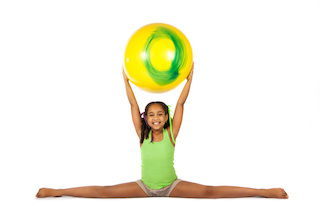
Splits demonstrate flexibility and it takes time for kids to master this position. Through consistent stretching exercises, kids can increase their flexibility until they are able to sit on the floor with their legs in a split position. It is also one move they can practice at home without any extra equipment so that they can continue working on their goal when they are not in class.

Handstand
Handstands are an essential, gymnastics pose that is one of the first advanced skills that kids master. Usually, this skill is learned through different stages with kids first learning how to do a headstand before starting to use a wall for balance. As kids progress in their abilities, a spotter will assist them until this position can be held independently.

Planche
Many of the coolest gymnastics positions are designed to emphasize a gymnast’s strengths. A planche shows off upper body strength along with the athlete’s endurance. At first glance, a planche looks like a basic plank or push-up position, but it differs slightly due to how a gymnast places their weight on their upper body rather than distributing it all over. Over time, kids can even work their way up to lifting their feet and legs off the floor so that they balance completely on their hands.

L-Seat
This strength position is commonly used in men’s gymnastics, and it is performed on the parallel bars or rings. The L-Seat looks exactly like its name implies. To hold the position, a gymnast places their hands on the rings or bars and use their arms to maintain a lift while keeping their legs parallel to the floor. Since this position requires serious abdominal strength, it is one of the more advanced moves that kids work towards in their summer camp gymnastics classes.

While kids look forward to their time working on gymnastics equipment such as trampolines and balance beams, learning these positions helps them master skills both on the floor and as they fly through the air. Summer camps offer gymnastics classes that make perfecting these poses possible while always maintaining a safe environment for kids. This way, every kid can reach their full potential for mastering their goals as a gymnast.
Canadian Adventure Camp is a coed overnight summer camp for kids located on a beautiful private island in the wilderness lakes region of Temagami.  Founded in 1975, it  provides acclaimed programs to children from around the world! Visit site: http://www.canadianadventurecamp.com/campers/summer-camp-program/